Dental Implants – Oklahoma City, OK
Restoring Your Smile from the Roots Up

Without a complete set of healthy teeth, eating, speaking, and smiling isn’t easy. Aside from the functional problems, missing teeth negatively affect image and confidence. You do not have to live with an incomplete smile. Take charge of the situation and improve your quality of life today! Contact us today to schedule a consultation with dental implants in Oklahoma City with our dentists.
Why Choose Dental Expressions for Dental Implants?
- In-House Dental Implant Placement
- Dentist with Years of Experience Restoring Smiles
- State-of-the-Art Dental Technology for Greater Results
What Are Dental Implants?
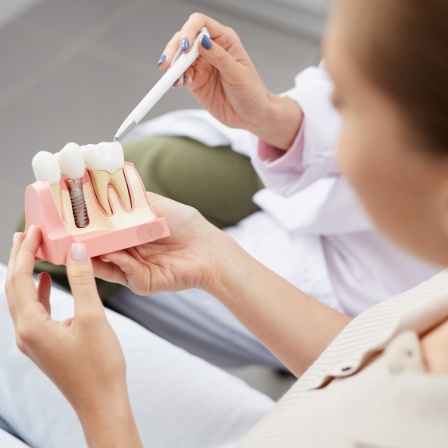
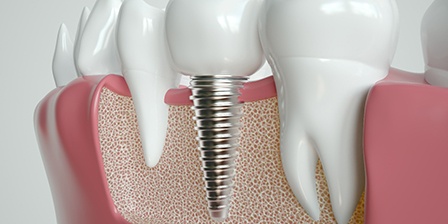
A dental implant is the only tooth replacement option that restores your tooth from the root up. The titanium post acts as the tooth’s root, giving the bone the stimulation that it needs to stay strong and hold up the implant and its custom restoration. After putting the implant in place and spending a few months healing at home, you’ll return to our office and allow our dentists to place your abutment (a metal connector piece) and your custom dental crown, bridge, or denture. Your restoration will be matched to blend in with the rest of your smile.
Because they recreate 100% of your original tooth’s structure, dental implants can feel, function, and look almost exactly like the pearly whites you used to have. If you’re missing one or more teeth, chances are your dentist will recommend dental implants as the ideal solution.
Benefits of Dental Implants

Each year, over 500,000 people choose dental implants to replace their missing teeth, making them one of the most popular dental services available. Because of their unique placement in the jawbone, dental implants can provide a wide range of health, lifestyle, and aesthetic advantages that you won’t be able to find with other replacements like bridges or dentures. Read below to learn about some of the life-changing benefits of dental implants in Oklahoma City.
Day-to-Day Benefits

- Confidence: Missing teeth can make it difficult to grin. Dental implants from Dental Expressions restore your teeth and give you the confidence you need to smile, speak, and eat without worry or embarrassment.
- Diet: Rooted in the jawbone, dental implants are incredibly strong. Instead of avoiding certain foods due to missing teeth or unstable dentures, dental implants allow you to eat a more varied diet. Of course, this is better for your health, but it also makes eating fun again.
- Look and feel: Dental implants are the only replacement that is truly comprehensive, restoring the teeth from the roots up. The result is a smile that looks and feels just like your natural one. In fact, dental implants allow your restorations to mimic the way your natural teeth emerge from the gums for the most realistic replacement.
Health Benefits

- Bone health: When missing teeth are left untreated, the hole that is left can lead to bone and additional tooth loss. As your bone deteriorates, it can cause changes in your facial appearance (facial sagging), shift teeth, and make you more vulnerable to gum disease. Dental implants act as the root of your tooth, stimulating the bone to keep it strong, so it can support the custom restoration on top.
- Dental health: Unlike a fixed bridge that requires healthy teeth to live on either side of the gap, which is then affixed with crowns to serve as anchors, dental implants placed by your implant dentist in Oklahoma City require no alteration of your natural, healthy teeth.
- Overall health: Dental implants encourage better oral health, which helps you avoid issues like gum disease. This problem is linked to increased risks of overall health problems like cardiovascular disease, high blood pressure, diabetes, and more.
Long-Term Benefits

- Longevity: If the idea of replacing your restorations every few years sounds like a hassle, you’ll be happy to know that dental implants can last for decades with proper care like brushing, flossing, and visiting our office for routine appointments.
- Predictability: One of the reasons why dental implants are so popular is they are incredibly predictable. When placed by a professional, they have a success rate of 95% even after 10 years, making it a solution that patients can depend on for years to come.
- Cost: While dental implants in Oklahoma City come with a higher cost initially, they may actually save you money in the long run. Traditional restorations like dentures must be replaced every 5 to 7 years; however, dental implants last much longer. This will save you time and money by avoiding unnecessary replacements and the dental visits that come with them.
Who Dental Implants Can Help

As we mentioned before, dental implants are extremely versatile. Missing one tooth? Not a problem. Missing multiple or all your teeth? We’ve got you covered.
Missing One Tooth
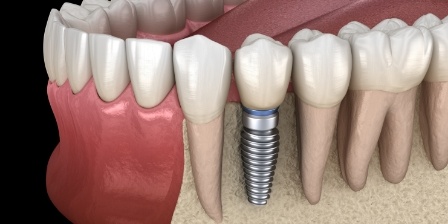
By surgically placing a single dental implant into your jawbone, you won’t be able to tell the difference between your natural teeth and your artificial ones. Once the implant is positioned correctly, you’ll spend a few months healing and allowing a process called osseointegration to occur. This fuses the implant to the bone. Once you’ve fully healed, you’ll return to have an abutment placed and then the customized crown. Your custom-made restoration will be matched to the color, size, and shape of your natural tooth, so you’ll leave with a perfectly blended smile.
Missing Multiple Teeth
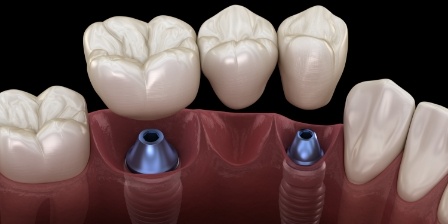
If you have multiple, consecutive missing teeth, your dentist might suggest an implant bridge. Placing implants on either side of the gap keeps your natural teeth from being altered, provides stimulation to the bone, and fills in the gaps left by the missing teeth.
Missing All Teeth
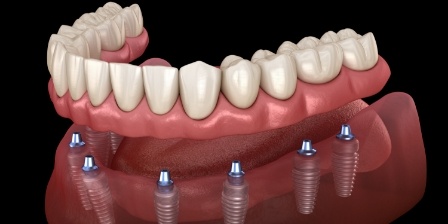
An implant denture is a great alternative to traditional dentures because they won’t accidentally slip or fall out. Depending on the level of bone density you have, Dr. Holman can place several implants on an arch to serve as the foundation that will hold up your custom-made denture. If there isn’t enough bone support, it may be necessary that you have a bone graft prior to receiving dental implants.
Learn More About Implant Dentures
Understanding the Cost of Dental Implants

When researching dental implants, one of the first things you’re likely to look up is the cost of the procedure. However, you’ll quickly find that there is no single set-in-stone price tag for dental implants; your specific needs will go a long way toward determining the amount you end up paying. We can discuss the financial aspect of the dental implant process in more detail during your initial consultation, but in the meantime, here are the basics that you should know.
Preliminary Treatments & Dental Implant Surgery
At the beginning of the dental implant process, you may be told that you need bone grafting in order to reverse any bone loss in your jaw. You may also require a tooth extraction if the tooth being replaced is still in your mouth. These types of preliminary procedures have their own costs that will need to be accounted for.
The cost of the dental implant surgery itself can be influenced by the location of the tooth or teeth being replaced. If you choose to have sedation administered, that can also affect the price. Fortunately, our dental implants are placed in-office, so you can avoid the inconvenience of having to pay a separate practice for the surgical part of the process.
The Parts of Your Dental Implant
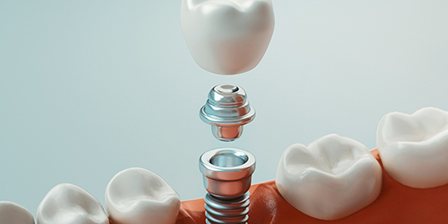
Determining the cost of the dental implants themselves means answering these questions:
- How many dental implants are needed to replace all of the teeth that were lost?
- Will the dental implants support a crown, a bridge, or a denture?
- What are the dental implant posts made out of?
- Who is the manufacturer that will provide the implant posts?
How Dental Implants Can Save You Money

Compared to other tooth replacement options, dental implants typically cost more. Does that mean traditional bridges and dentures are the better choice for your bank account? Not necessarily. The higher cost of dental implants can be offset by the fact that they don’t need to be replaced as often as dentures and bridges do. On top of that, dental implants make it easier to avoid potentially costly dental issues because they require very simple maintenance.
Does My Dental Insurance Cover Dental Implants?

Not all dental insurance plans are the same, so before you begin the dental implant process, you should take a look at your own policy in order to get a clear idea of what benefits are available. While some insurance plans will not pay for dental implants, they might still cover related treatments, such as any necessary preliminary work.
Making Dental Implants Affordable

We will work with you to maximize your dental insurance benefits so that you can reduce your out-of-pocket costs for dental implants as much as possible. And if you would have trouble covering the full cost of your care all at once, you can apply for CareCredit financing, which lets you choose from a number of low monthly payment plans.
Dental Implant Post-Op Instructions
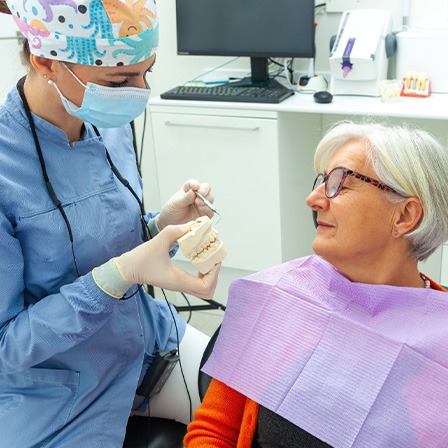
Dental implant post-op instructions in Oklahoma City are designed to help you recover successfully. However, you must adhere to them to avoid complications. From knowing what to do as soon as you return home to what side effects to expect to which foods you should and shouldn’t eat, and how to maintain your oral health and hygiene, we will make sure you are prepared. To get a head start on what life will be like after dental implant surgery, read the following information and call us with any questions.
What to Do Directly After Dental Implant Surgery

As soon as you return home after surgery, make sure that you avoid strenuous activity for the next few days. Your mouth needs time to heal, and any unnecessary pressure or strain you exert can increase bleeding and slow recovery. It is during this time that blood clots must form over your surgical sites. To ensure they stay in place and do not become dislodged, do not spit, smoke, use a straw, or vigorously swish.
Common Side Effects

To avoid sudden panic, there are a few common side effects that can occur in the days following your surgery, including minor bleeding and swelling, and some discomfort. Over-the-counter pain relievers can alleviate some of the soreness and pain, while a cold compress can help reduce swelling.
You can also use clean gauze to stop the bleeding.
These side effects should go away after a short time, but if you notice them worsening, do not wait to call our office.
Diet

You will need to stick with soft foods initially, as your mouth should not experience additional pressure from biting and chewing. Yogurt, mashed potatoes, scrambled eggs, oatmeal, lukewarm soup, and other foods of a similar consistency are what you can expect to enjoy.
After some time has passed, and your mouth begins to feel “normal,” you can begin incorporating other solid foods into your diet.
Health & Oral Hygiene

After a full 24 hours, you can begin to clean your teeth and gums normally. You will need to be careful when cleaning around your surgical sites to avoid irritating the sockets or dislodging the blood clots. When rinsing your mouth with warm salt water, do not swish; instead, let it move from side to side before pouring it out.
What to Do After Your New Teeth Are Attached

You should not experience any bleeding or swelling once your new teeth are firmly attached. Your implant dentist in Oklahoma City will ensure your restoration fits correctly and comfortably so you can begin using your new teeth right away.
Dental Implant Failure & Salvage

While dental implants in Oklahoma City have a success rate of over 95%, occasional implant failure can occur, often due to factors like infection or trauma. If you notice any unusual pain or looseness in one of your implants, you need to act promptly. Contact Dental Expressions immediately! Our skilled team will evaluate the issue and take every measure to protect your dental implants and ensure your oral health is maintained.
Learn More About Dental Implant Failure & Salvage
Dental Implant FAQs
Dental implants in Oklahoma City are a big investment because they can last for decades with the right aftercare. Although you’re excited to start your journey to a complete smile, it’s normal to have several concerns before you’re ready to commit to them. There’s no need to worry. Dr. Holman will take the time to explain the treatment process during your initial consultation. While you wait for your appointment, here are the answers to a few of the most common questions about dental implants.
Am I too old for dental implants?
If you’re interested in dental implants, your age doesn’t matter as long as you’ve finished growing. Instead, several other factors determine your candidacy, like your oral and medical health. Dr. Holman will also discuss your lifestyle history and take a CT scan to ensure dental implants are the right choice for you.
Can I get dental implants if I have gum disease?
Dental implants can last for a lifetime if they have the right foundation and care over the years. Their long-term success relies on their integration with your jawbone and remaining infection-free. Therefore, you can’t get dental implants if you have active gum disease. With infection being the leading cause of tooth loss, you may need periodontal disease therapy before undergoing your placement surgery. Although it will add another step to your treatment plan, it’s time well spent to ensure the success of your new smile.
Does getting dental implants hurt?
Replacing your missing teeth with dental implants will require oral surgery. During the procedure to place the posts into your jawbone, you won’t feel any discomfort because an anesthetic or sedative is used.
Patients who need one implant post may only need a local anesthetic, whereas a person needing multiple posts or those with complex needs may require sedation or general anesthesia. No matter the type used, rest assured, you won’t feel any pain during your placement surgery. As with any surgical procedure, there will be some discomfort during the recovery process, but it can be managed easily using an over-the-counter pain reliever.
Will my dental insurance pay for dental implants?
Unfortunately, it’s rare for dental insurance to pay the entire cost of dental implants, but they may cover certain aspects of the treatment depending on your specific policy. Some insurance companies may cover as much as 80% of certain steps in your treatment until you reach your annual limit, but you’ll need to pay your deductible first. We’ll work on your behalf with your insurance carrier to file the necessary claims and paperwork to lower the amount you need to pay out of pocket.
We’ll discuss any remaining balance as well as your payment options to keep your treatment affordable, such as using third-party financing with CareCredit. You’re given the funds you need for the remaining costs, which you will then repay using a payment plan that accommodates your budget.
If you have questions about dental implants, contact our office today to learn more.